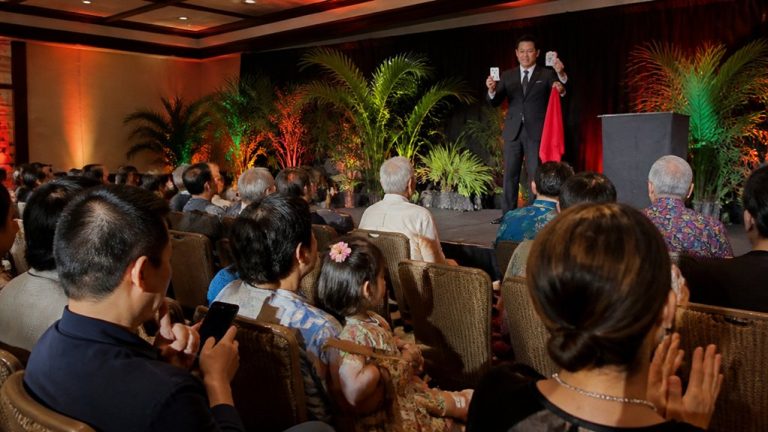
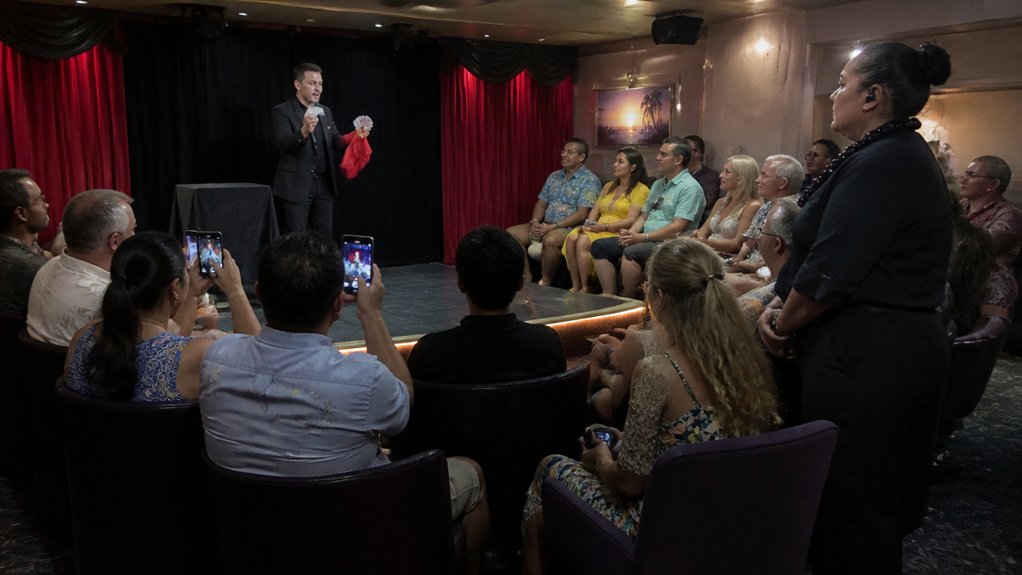
Phone or camera, souvenir or slip-up, you’ll want to know the difference before you step into the Hilton lobby’s soft lights and polished parlor. You can snap a few shots before and after the 90 to 100 minute show, but once the magic starts, glowing screens and raised devices can end your night fast. The tricky part isn’t your phone. It’s the camera that looks too serious, and what staff may do when they spot it.
Key Takeaways
- Phones and compact cameras are usually allowed into the Hilton lobby and theater, but visible DSLR or interchangeable-lens cameras may be stopped at entry.
- Photos are typically allowed only before curtain in the lobby and seating areas, especially near the Museum of Curiosities and theater seats.
- During the 90 to 100 minute show, all photography, audio, and video are prohibited, including phone recording, screen glow, and flash.
- Ushers actively enforce the policy with reminders, bag checks, warnings, possible confiscation, and ejection for repeated or obvious violations.
- After final applause, a brief meet-and-greet usually opens a photo window, so keep cameras holstered until staff permits post-show pictures.
Can You Take Photos at the Honolulu Magic Show?
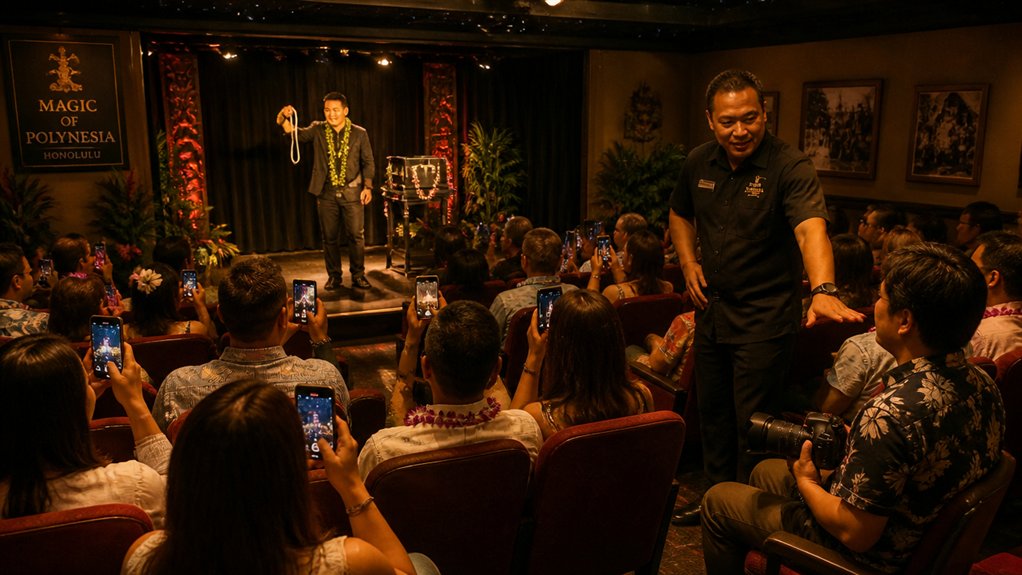
Step in with your camera if you’d like, but keep it tucked away once the Honolulu Magic Show begins. You can bring a camera inside the Hilton and into the Victorian-style parlor theater, where velvet seats, dark wood, and quiet anticipation frame the room. Before the curtain rises, you’ll find your best shots in the Museum of Curiosities and around Show Seating, where the mood feels playful and polished. If you’re wondering about photo policy, phones and cameras are both fine before showtime, but neither can be used during the performance.
Once the performance starts, photography and video are off limits for the full 90 to 100 minutes. Staff members enforce the rule, and signs back them up. During the close-up magic, that makes sense. A flash can ruin the surprise faster than a rabbit misses its cue. Save your photos for before the show or the brief meet-and-greet afterward.
Are Phones Allowed Inside the Show?
Yes, you can bring your phone inside, but once the lights go down, you can’t use it for photos or video during the 90 to 100 minute show. If you want a few shots, arrive 15 to 20 minutes early for lobby or Museum of Curiosities photos, and keep your phone ready for the brief meet-and-greet after the curtain call. For those pre-show or post-show shots, use low-light settings like Night mode, a steady grip, and no flash for cleaner photos. Set it to silent, skip the flash, and follow the ushers and signs so your phone stays a pocket item instead of becoming part of the act.
During-Show Phone Rules
Although you can bring your phone into the theatre, it needs to stay out of action once the 90 to 100 minute show begins. During the Magic Show, phones can’t record, glow, buzz, or snap photography of any kind. Signs and pre-show announcements make that crystal clear, and the rule covers smartphones just as much as cameras and flash. Ushers watch for screens because a sudden light can break the mood faster than a dropped popcorn tub. Following magic show etiquette helps everyone enjoy the performance without distractions. If you ignore the policy, staff may confiscate your device or ask you to leave. If you need your phone for accessibility or an urgent reason, tell staff beforehand so they can arrange a discreet accommodation for you. That keeps illusions crisp, intimate, and pleasantly hard to decode.
Pre- And Post-Show Photos
Before the house lights dim, your phone is perfectly welcome, and it can come back out again once the final applause hits. Arrive 15 to 20 minutes early for pre-show photos in the Museum of Curiosities and the lobby, where odd treasures and polished wood make easy backdrops. This 15 to 20 minutes early arrival window also gives you enough time to get settled before the Honolulu magic show begins. If you’re using valet parking, that extra cushion helps.
During the show, devices stay away, but the moment it ends, staff opens a quick post-show meet-and-greet for photos with the performers. Ushers keep that photo window moving, so don’t wander off or expect a long receiving line. Step up right away and you’ll get your shot. If you hold VIP tickets, you’ll usually get priority access and a closer angle for those final, smiling pictures too.
Have a question about this guide?
Ask for tour ideas, hotel suggestions, or a simple trip plan that combines both.
Trip Helper
Silent Mode And Flash
Tuck your phone into silent mode and keep it there, because you can bring it inside but you can’t use it to capture the show. At the Magical Mystery Show, staff, signs, and the pre-show announcement all make the same point: no photos, no video, no audio, and absolutely no flash once the act begins. This quick FAQ point is especially helpful for first-time visitors who want to avoid any surprises before showtime.
You can keep your phone in a pocket or bag, but the ringer must stay off so the room stays hushed and the sleight of hand lands cleanly. Silent mode doesn’t give you permission to snap a quick shot. If you try, staff may confiscate the device or escort you out. Save your camera roll for the lobby or meet-and-greet, where smiles are welcome and the only sparks should be astonishment.
Are Cameras Banned During the Performance?
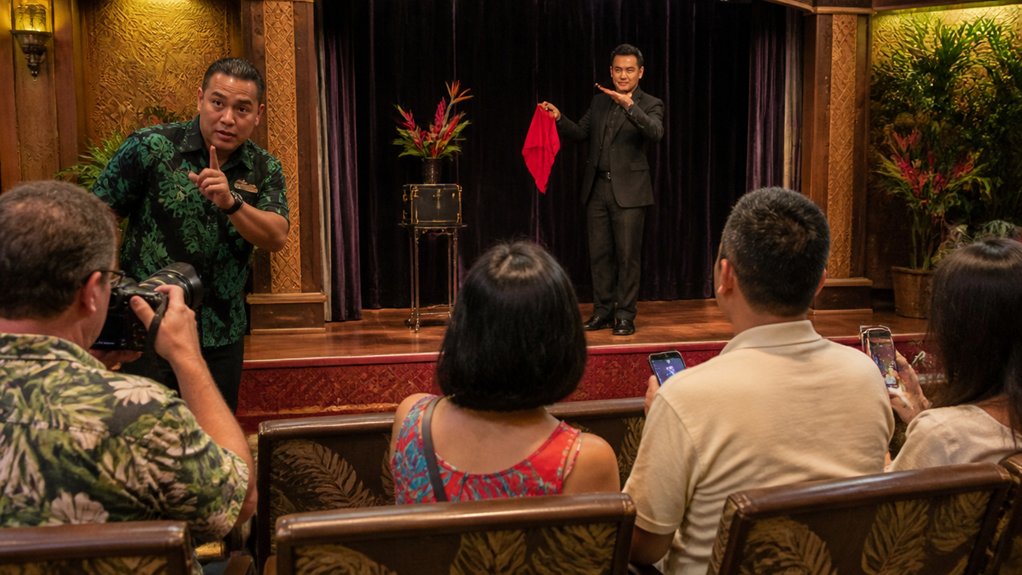
During the performance, you can’t use cameras or record video, and you’ll hear that rule from the ticket page, the signs, and the staff before the lights go down. You can usually carry a phone, but a DSLR or other big-lens camera may get flagged at the door, and if you snap photos during the show, ushers or security may step in fast. That policy helps preserve the mystery and focus of a live Honolulu magic show. Once the final applause hits, you can take photos before you leave and during the brief meet-and-greet, so you still get your keepsake without testing the house rules.
Performance Photo Ban
Although you can bring a camera into the venue, you can’t use it once the magic starts. Signs and staff reminders make it plain: “No photos or video” during the performance. That rule protects the intimate setting, where close-up illusions land best without flashes, clicks, or glowing screens. If you ignore it, taking pictures can lead to confiscation or a quick trip out the theater.
Happily, you don’t have to leave your camera behind. You can snap shots before the show and after it, when a brief meet-and-greet opens for guest photos with performers. Check event pages too. They often list camera restrictions, and this theater enforces them. Use the free valet and enjoy the mystery instead of playing paparazzi for one night. First-timers often find that the intimate setting makes the no-photo rule feel more understandable once the performance begins.
Phones Versus DSLRs
That no-photo rule gets a little more nuanced once you look at phones versus bigger cameras. Officially, the show bans photos and video, and signs plus Ticketmaster spell out NO CAMERAS, AUDIO, VIDEO. In practice, you’ll notice many people carry phones. That doesn’t mean you should raise one during the act. If staff spot recording or snapping shots, you could get ejected or lose the device for the night. Honolulu Magic Show Cancellation Policy details separate terms for ticket changes and refunds, so photo enforcement should be treated as its own venue rule. A DSLR draws more attention fast. Venues often single out interchangeable-lens cameras and may refuse them at the door or make you stow them. Smaller point-and-shoots usually get less scrutiny. To keep fantasy and reality aligned this New Year, check the venue’s policy before you travel and save the confirmation on your phone for backup.
Before And After Photos
If you’re hoping for a souvenir shot, the timing matters more than the camera. You can carry a camera inside, but signs, announcements, and staff enforce a firm no-photo rule during the 90 to 100 minute show. Save your energy for pre show timings in the Museum of Curiosities and the quick post-show window. Bringing only your essential items can also make moving through these photo moments quicker and easier.
| When | What to do |
|---|---|
| Before show | Browse, test settings |
| During show | Put devices away |
| After show | Grab souvenir poses |
After the final applause, ushers guide a brisk meet-and-greet instead of a slow line. VIP seats often mean faster access and closer frames. Use simple lighting tips, smile, and shoot fast. You won’t get a second chance once the curtains open.
Which Cameras May Be Refused at Entry?
Watch what you carry to the door, because the cameras most likely to get turned away are the big, professional-looking ones. At this Honolulu magic show, venue signs and ticket info say NO CAMERAS/AUDIO/VIDEO, so security may stop visible DSLRs or other interchangeable-lens models before you enter. During bag inspections, ushers can ask you to check, cover, or leave behind a large camera body or detachable lens. That can shape guest reactions fast, especially when the lobby hums with cards, chatter, and pre-show music. If you’re wondering whether a Waikiki magic show is worth your time, knowing the photo policy ahead of arrival can prevent hassles at the door. Compact point-and-shoots and phones usually make it inside easily, but don’t mistake that for permission to use them. If you’re traveling with an SLR, bring approval or media pass. If not, plan for camera storage or leave it at hotel.
Why DSLRs Get More Scrutiny Than Phones
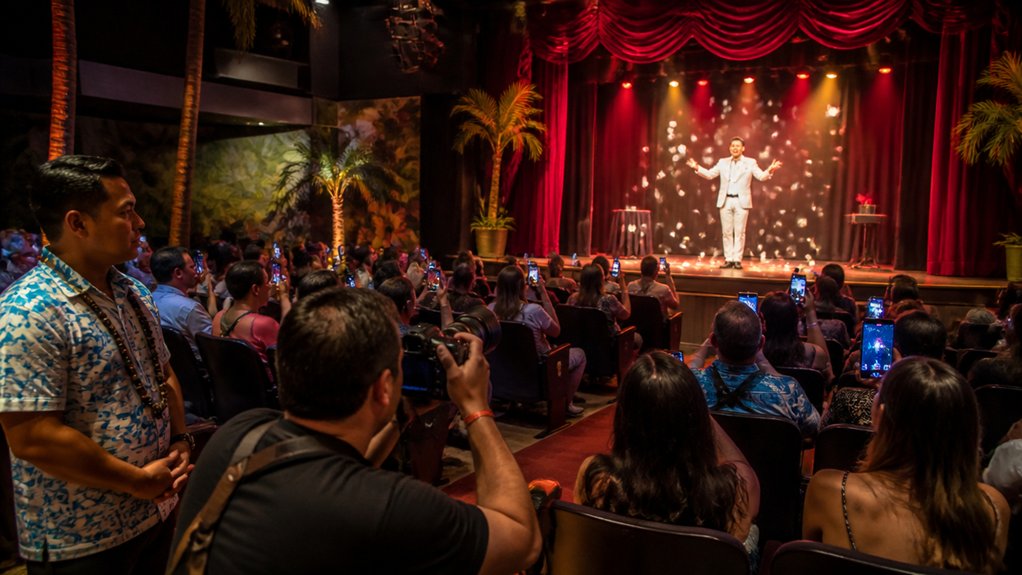
When you walk up with a DSLR, the big body and long lens can make staff pause before you even reach the door. You’ll usually see stricter screening for that kind of visible gear, while your phone slips by with less attention because venues read it as personal use, not pro-level recording. That difference shapes the whole entry process, from bag checks to the polite but firm request to stash the camera before the magic starts. If you’re also planning your arrival, checking Honolulu Magic Show Parking options in advance can make entry smoother overall.
Visible Professional Equipment
Notice what catches the usher’s eye first: a DSLR with a chunky body and detachable lens looks like pro gear before you even raise it. Its camera silhouettes signal intent, and lens identification plus accessory indicators tell staff you’re carrying more than a casual snapshot tool. That visibility matters because venues often name DSLRs or professional cameras in the rules. Your phone usually blends in, but a visible DSLR suggests sharper, longer-range images that could copy proprietary illusions. Being in the front row can also make any visible camera use feel more intense to performers and staff. If you’re traveling, check the policy ahead and carry printed permission when allowed. Otherwise, staff may ask you to stow the camera or prove you’re cleared to use it inside before the curtain rises and the house lights dim for the curious crowd around you tonight.
Venue Screening Differences
That quick glance at your gear shapes the whole screening experience at the door. At entry checkpoints, staff usually wave phones through, but a DSLR changes the mood fast. Its larger body, detachable lens, and long reach suggest print-worthy shots, so ushers compare it to posted access policies like “NO CAMERAS/AUDIO/VIDEO.” In small theaters, especially cozy rooms under 60 seats, you might slip by with a compact camera. Bigger venues, headliner rooms, and Vegas-style houses tend to tighten bag inspections and stop visible SLRs cold. A bulky camera bag, flash, or extra lens invites questions and sometimes a trip back to your car. If you truly need DSLR access, carry printed permission or a media pass. It beats negotiating under bright lobby lights later. If you came in without driving, avoiding a bulky camera setup also makes Waikiki magic show entry and transit logistics much easier.
Do Flash and Video Follow Stricter Rules?
Although everyone wants a quick souvenir shot, flash and video usually face the toughest rules at a Honolulu magic show. During the act, you can’t take still photos or record at all. Flash consequences are immediate because bursts of light distract magicians, break the mood, and annoy nearby guests.
At a Honolulu magic show, flash and filming are off-limits during the act because they distract performers and disrupt the atmosphere.
- Video is banned during performance.
- Flash is banned on phones and cameras.
- Recording detection matters because glowing screens stand out fast.
- Cameras are fine before or after for meet-and-greet photos.
- Emergency exceptions don’t turn the show into a filming zone.
If you bring a DSLR, expect scrutiny at entry. Signs and announcements repeat the rules, so you won’t miss them. Ignore them, and you could lose your camera or seat. Guests planning ahead should also review best seats since venue location can affect how quickly staff notice phone screens and camera use.
How Staff Enforce the No-Photo Rule
Before the curtain even rises, staff make the rule hard to miss. In the lobby and entryways, you’ll see signs and hear clear pre-show reminders from ushers and the box office. That early staff engagement sets the tone.
Once you’re seated, staff scan the aisles and watch from the back like quiet hawks. If you lift a phone or camera toward the stage, they usually step in with verbal warning protocols and a polite request to stop. At the door, visible DSLRs or big interchangeable-lens cameras can trigger extra checks, and staff may ask you to stow them. For obvious recording or flash, enforcement tightens, with Ticketmaster rules cited and confiscation procedures kept ready if needed. Nobody wants their magic interrupted by a screen. Unlike tipping etiquette, photo enforcement is typically handled by venue staff rather than left to post-show guest discretion.
What Happens If You Take Photos During the Show?
If you snap a photo once the show starts, staff will likely move fast and ask you to stop, and they may confiscate your camera or phone on the spot. You could also be escorted out, since ushers watch the crowd and pre-show announcements make the rule unmistakable.
- Your screen glow can break audience etiquette.
- Signs back up serious enforcement.
- Phones aren’t excused over cameras.
- Big lenses draw extra scrutiny.
- Ignore warnings and you risk legal consequences, despite enforceability challenges.
In a dark theater, even one click or bright rectangle can expose illusions and distract nearby guests. That’s why the venue treats a quick snapshot less like a souvenir and more like a problem for staff, who don’t blink when the magic needs protecting at all tonight. While planning your outfit, remember that Honolulu Magic Show Dress Code expectations can also shape how smoothly you enter and enjoy the venue.
When Can You Use Your Phone or Camera?
Usually, you can use your phone or camera only at the edges of the experience, not during the magic itself. Use it before the show begins, while the room still hums with chatter and seat searches. Once announcements start, put everything away. Venue signs and Ticketmaster listings plainly say no cameras, audio, or video, so expect staff to enforce the rule. That’s basic audience etiquette, and it also respects privacy concerns.
Ticket terms can vary with ticket prices, so always review the specific event listing before you go.
You can bring a phone or compact camera, but a big DSLR may draw extra scrutiny or even trouble at the door. Check the venue policy ahead of time if you travel with one. Keep it tucked in easy device storage once doors close, unless you have written permission or press credentials with you.
Can You Take Photos After the Show?
Once the final applause fades, the photo rule flips in your favor. You can take photos after the show, and a short meet-and-greet starts right away. Staff keep the line moving, so think quick snapshots, not a fashion shoot. If you carried a camera inside, keep it holstered until now. During the show, one click could cost you the device or your seat. Guests with VIP seats often reach the photo line sooner, which can make the splurge feel more worthwhile.
- Photos are allowed after the performance
- Videos should wait until staff says okay
- VIP seats get faster access and closer angles
- Use crowd etiquette and simple lighting tips
- Expect keepsake options through brief performer photos
You’ll hear chatter, shuffling feet, and a few happy laughs. Stay ready, smile fast, and you’ll leave with a clean memory and proof in hand tonight.
Best After-Show Photo Opportunities
Stick around for the sweet spot right after the curtain call, because the best photo chance starts during the brief meet-and-greet that follows the 90 to 100 minute show. With only about 60 guests in the intimate parlor, you’ll get close fast, so think quick poses and selfies instead of a long receiving line. If you’ve got VIP seats, you’ll move up sooner and snag angles with less waiting.
Because of the show’s interactive magic style, this short meet-and-greet often feels personal and lively instead of rushed. Arrive 15 to 20 minutes early, then stay a bit later if photos matter to you. Before the room empties, you can catch crowd candidness, polished smiles, and subtle lighting tricks from the cozy space. Use your phone or camera, skip flash and tripods, and keep the flow moving. Nobody wants to photobomb for very long.
Signs and Announcements to Expect
Before the lights dim, you’ll spot the photo policy in plain sight. At most Honolulu magic shows, you can expect clear sign placement at the entrance and lobby, plus a calm reminder before the curtain rises. Listen for announcement timing just before the show starts. You’ll also notice language clarity that leaves little room for guesswork. Accessibility matters too, so ask about show accessibility if you need help hearing or understanding the pre-show policy.
- Entrance signs say no photos or video during the performance.
- Lobby notices allow camera use only before or after the show.
- Ushers ask phones and cameras to stay off for 90 to 100 minutes.
- VIP areas may post brief post-show photo rules.
- Some warnings mention confiscation, ejection, or no entry for visible DSLRs.
It’s all easy to spot, even before the first puff of stage smoke appears tonight.
How to Avoid Photo Policy Problems
If you want an easy night, check the event page and the ticketing “Event Info” section before you leave your hotel room. Rules online often beat island casual. If you want an SLR, ask the box office early and save written approval. Use respectful etiquette, follow privacy considerations, and keep storage tips handy for entry.
| Move | Why | Best timing |
|---|---|---|
| Check listings | “No cameras” is common | Before leaving |
| Skip photos during show | Confiscation happens | 90 to 100 minutes |
| Use phone later | Meet-and-greet shots work | Before or after |
A small camera rides easier than a DSLR, and nobody enjoys a debate with security. Save snapshots for the quick post-show hello.
Frequently Asked Questions
Is There a Coat Check for Prohibited Camera Equipment?
No, you won’t find a dedicated coat check for prohibited camera equipment. You should keep gear with your belongings, use hotel or vehicle luggage storage, and don’t expect on-site equipment surrender or secure separate storage.
Do Media Passes Ever Allow Professional Photography Inside?
Yes, like a key opening one backstage door, you can sometimes shoot professionally inside if you’ve secured media credentials; editorial access follows press protocol, and intimate shows still confine you to only strict, preapproved moments.
Are Photo Rules Different for Children Attending With Families?
No, you shouldn’t expect different rules for children; child privileges and age exceptions don’t apply. With guardian consent, your kids can’t photograph during the performance, though you can let them snap photos before and after.
Can International Visitors Face Different Camera Security Screening?
No, you usually won’t face screening; like Dorothy spotting the wizard, you’ll find venue rules govern checks, not nationality. Staff may inspect bags, note passport inspections, navigate customs regulations and language barriers, yet enforce camera policies.
Does the Venue Policy Change for Private or Corporate Events?
Yes, you may see different rules for Private bookings, but you should expect standard restrictions unless Contract exceptions or Event addendums explicitly allow photography. You’ll want written approval and should show staff documentation at check-in.
Conclusion
You’ll have the smoothest night if you treat your phone like a pocket tool, not a spotlight. Snap a few lobby or parlor photos before the doors close, then tuck every screen away once the room dims and the magic starts. Leave bulky DSLRs and long lenses behind unless you’ve cleared them in writing. After the final applause, use the short photo window fast. Think velvet, warm lights, soft chatter, and one last clever click.