
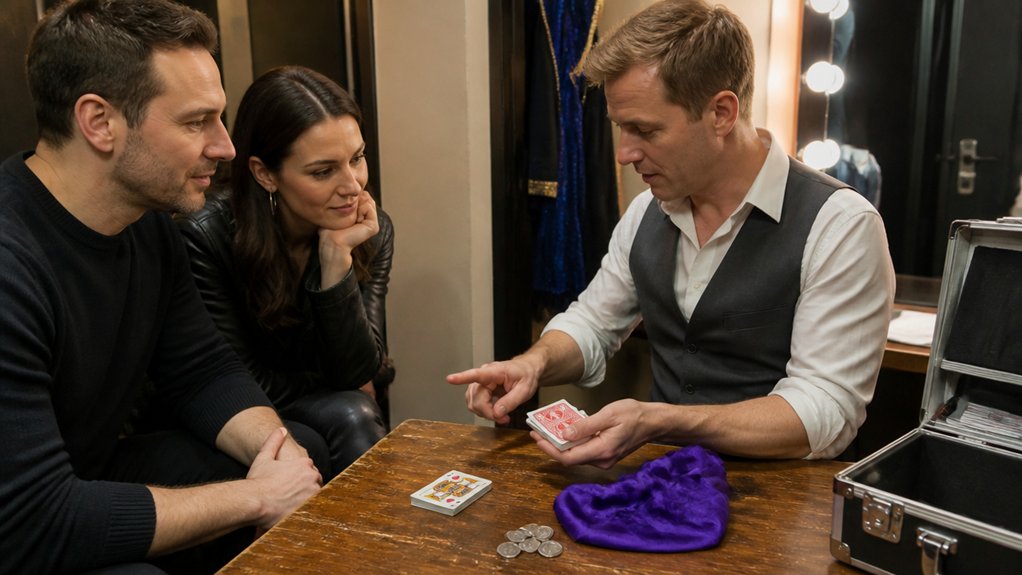
You can know how a card switch works and still feel your pulse jump when the room goes quiet, the spotlight tightens, and the deck snaps in the magician’s hands. A good show doesn’t just hide a move. It guides your eyes, sets a rhythm, and turns a small action into a clean impossibility. The secret may fit in your pocket. The real effect takes a stage, a story, and timing sharp enough to make you miss the obvious.
Key Takeaways
- Knowing a method rarely kills the effect because timing, misdirection, and selective attention still hide the crucial moment.
- Good magic feels impossible because the brain builds a clean story while the performer quietly breaks it.
- Live shows add lighting, music, pauses, and audience energy that explanations cannot reproduce on a screen or page.
- Exposure reveals mechanics but removes suspense, trust, and presentation, while instruction teaches craft without flattening wonder.
- Magicians guard secrets to protect astonishment, preserve livelihoods, and keep audiences focused on experience rather than smug analysis.
Why Magic Tricks Explained Still Feel Magical

Even when you know the secret, a good magic trick can still land like a small shock. You may know the invisible thread or the false count, yet misdirection and presentation still steer your eyes. A skilled performer shapes timing, story, and showmanship so the critical move slips past your selective attention. Then change blindness does the rest. Exposure can name methods, but it can’t bottle the room: velvet curtains, bright spots, a pause, a laugh, the hush before applause. That’s why stage illusions still work for you, even after YouTube spoilers. David Copperfield knew scale matters. A flying body, distant music, and careful staging make explanation feel thin and oddly incomplete to most viewers everywhere in the seats night after night without fail. Magicians rely on selective attention to guide what audiences notice and what they miss.
What Makes Magic Feel Impossible
Because your brain likes a clean story, magic feels impossible the moment a magician quietly breaks that story in plain sight. You watch a hand, hear a joke, and miss the secret beat. That’s misdirection working with selective attention, inattentional blindness, and shaky perception.
Magic works when your brain follows the story and quietly misses the moment the impossible slips into place.
- Strong presentation and narrative steer what you expect to see.
- Sleight of hand, false counts, and hidden supports slip through while your focus follows eye contact or a tap on the table.
- Suspense, surprise, and wonder hit fast, so your brain stitches gaps into one smooth miracle.
You aren’t foolish. You’re human, tracking only so much at once while the room glows, cards click, and impossibility lands with a smile right before you can say wait, rewind, please. Good magic show etiquette also protects that feeling by keeping reactions respectful and avoiding spoilers that weaken the shared sense of wonder.
When Explaining Magic Becomes Exposure
When a magic explanation stops serving craft and starts giving away the engine, it crosses into exposure. You can see the line in history. Reginald Scot’s 1584 book used debunking through public revelation to challenge witchcraft claims. Later, Val Valentino’s TV specials exposed the secrets behind famous illusions, and suddenly magician shows felt flatter. That isn’t teaching. In an instructional context, you build skill, timing, and choices. Exposure simply hands over hidden supports, invisible thread, or a topit and lets the air out. You may get clicks, but you’ll also lose the emotional journey and strain performer-audience trust. Astonishment needs room to breathe, not a running commentary and a flashlight on every trapdoor backstage and every whisper in the wings tonight for anyone watching. The same principle applies when filming a show without being annoying, because documenting a performance should preserve the audience’s experience rather than interfere with it.
Why Magicians Guard Trick Secrets
Although a trick may hinge on something as plain as invisible thread or a pinch of flash paper, magicians guard those details so you can feel the real jolt of wonder in the room.
- Magicians guard secrets to protect wonder and preserve audience astonishment.
- The history of magic shows why. Scot in 1584 and TV reveals in 1997 shrank the value of mystery.
- Today, online exposures can dissect a televised act by morning, turning applause into smug comments.
In the story of Hawaiian magic shows, that same respect for mystery helped performances feel enchanting across generations. You can see the line between teaching vs exposing. One builds skill and respects the art form. The other breaks an ethical code, hurts livelihoods, and flattens surprises before they land. You lose the gasp, the hush, the shared grin, and the tiny impossible spark for everyone.
How to Learn Magic Without Ruining Wonder
Learning magic the right way feels a lot like getting a backstage pass without stomping on the set. You start small with Tricks you can carry in a pocket: a card trick, a coin vanish, beginner card-magic drills. As you learn magic, build foundations first. Practice sleight-of-hand, false counts, and basic palming until the moves feel quiet and natural. Then focus on presentation, timing, and misdirection. A steady voice, a pause, and one lifted eyebrow can beat fancy props. Study the psychology of attention so you guide eyes and thoughts like a good tour guide. Watching an interactive magic show can also teach how audience participation deepens surprise without exposing the method. Choose books and teachers over exposure clips. Use secrets to create better astonishment, not cheap spoilers, and respect the community that keeps wonder alive for your future audiences too.
Frequently Asked Questions
Can Children Enjoy Magic Differently Than Adults?
Yes, you’ll see children enjoy magic differently through imaginative engagement, age appropriate wonder, shorter attention span, peer influence, parental mediation, cognitive development, play based learning, stronger emotional response, and simpler story comprehension than adults do.
Do Cultural Traditions Influence How Magic Performances Are Received?
Yes, you see cultural traditions shape reception through cultural symbolism, ritual performance, audience etiquette, taboo illusions, heritage narratives, folk storytelling, religious sensitivities, local superstitions, and communal participation, so you interpret amazement, respect, or discomfort differently.
How Has Television Changed Audience Expectations of Magicians?
Like a magnifying mirror, television changed what you’d expect: televised pacing, close up intimacy, editing illusions, and viral clips fuel audience skepticism. Celebrity magicians, format gimmicks, reality crossover, and expectation escalation make you demand miracles.
What Should You Do if You Accidentally Reveal a Trick?
If you accidentally reveal a trick, apologize gracefully, pivot performance, and reframe narrative; involve audience, employ misdirection, recreate illusion elsewhere, offer refund if needed, save any private explanation, and learn boundaries afterward for future shows.
Are There Accessibility Considerations in Live Magic Shows?
Yes, you should plan wheelchair access, seating flexibility, sensory accommodations, quiet performances, sign language, captioning options, audio description, tactile props, and service animals so you can make your live magic show welcoming and inclusive for everyone.
Conclusion
You leave a good magic show like you leave a night market. You saw the bright cloth, heard the soft snap of cards, followed the lantern glow, and still missed the turn that mattered. That’s the point. The secret is only the map. Wonder is the road, with timing, trust, and a little stage dust on your shoes. So learn the moves if you want. Just keep one pocket open for surprise, and enjoy the detour home.